
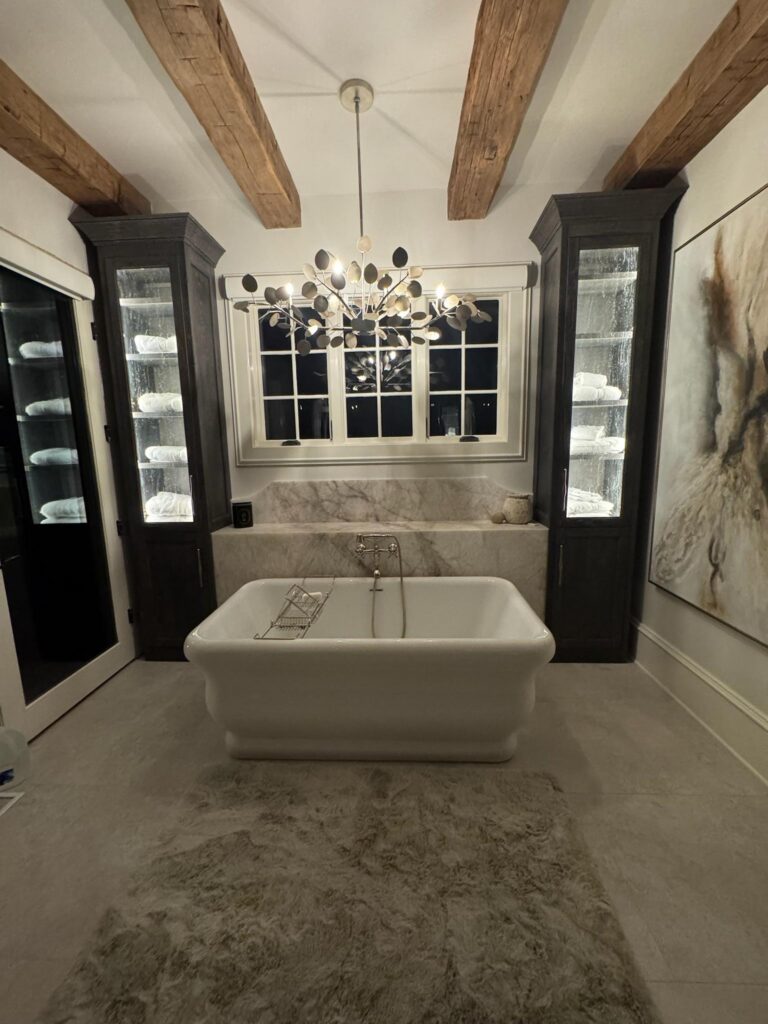
Faux beams are everywhere on TikTok right now, usually with a caption that says so easy and cheap. Easy and cheap are true. The question people ask next is whether a polyurethane beam does anything for the value of the house, or whether it is just a look you will live with. Here is a straight answer from a shop that builds the real thing and competes with foam every day.
The short answer
Faux beams add appeal, not value. A well-done beamed ceiling helps a listing photograph and can help a room feel finished, and that can help a house sell faster. But appraisers do not assign a dollar line to foam beams, and a buyer who taps one and hears a hollow thud mentally files it with the vinyl plank. Real wood beams are a feature people mention in the listing and point at on the walkthrough. That is the difference: foam is decor, wood is a feature.
Why faux beams are cheaper up front
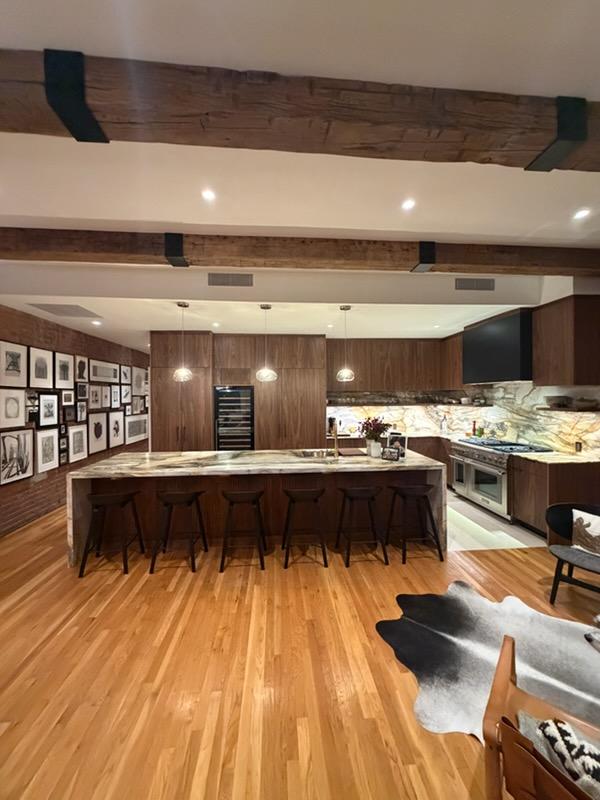
A faux beam is high-density polyurethane cast in a mold taken from a real timber, then painted. It weighs very little, cuts with a handsaw, and goes up with adhesive and a few screws. No reclaimed material to find, no milling, no joinery. The low price is honest; you are paying for a molded shape and a paint job. The comparison most people miss is to a real reclaimed box beam, which is also hollow and also installs on a cleat, but is made of actual 100-year-old barn wood.
Where faux beams fall short
- Repeating grain. Every beam comes from the same handful of molds. Walk a room with six of them and you will spot the same knot six times.
- Paint, not wood. A scratch shows cream foam. A real beam scratched shows more wood.
- The sound. Knock on it. Everyone does.
- Heat and sun. Polyurethane can soften and yellow near fireplaces and skylights; barn oak has already spent a century outdoors.
- Nothing to refinish. You cannot sand, restain or re-oil foam. A real beam can be refinished for the life of the house.
When faux is the right call
We will say it plainly: there are rooms where foam makes sense. A rental you will turn over in five years. A ceiling you cannot block for weight. A budget that is strictly about the look for a season. A ceiling so high nobody will ever touch the beams. In those cases buy good foam, paint it well, and enjoy it.
When a real box beam is the better buy
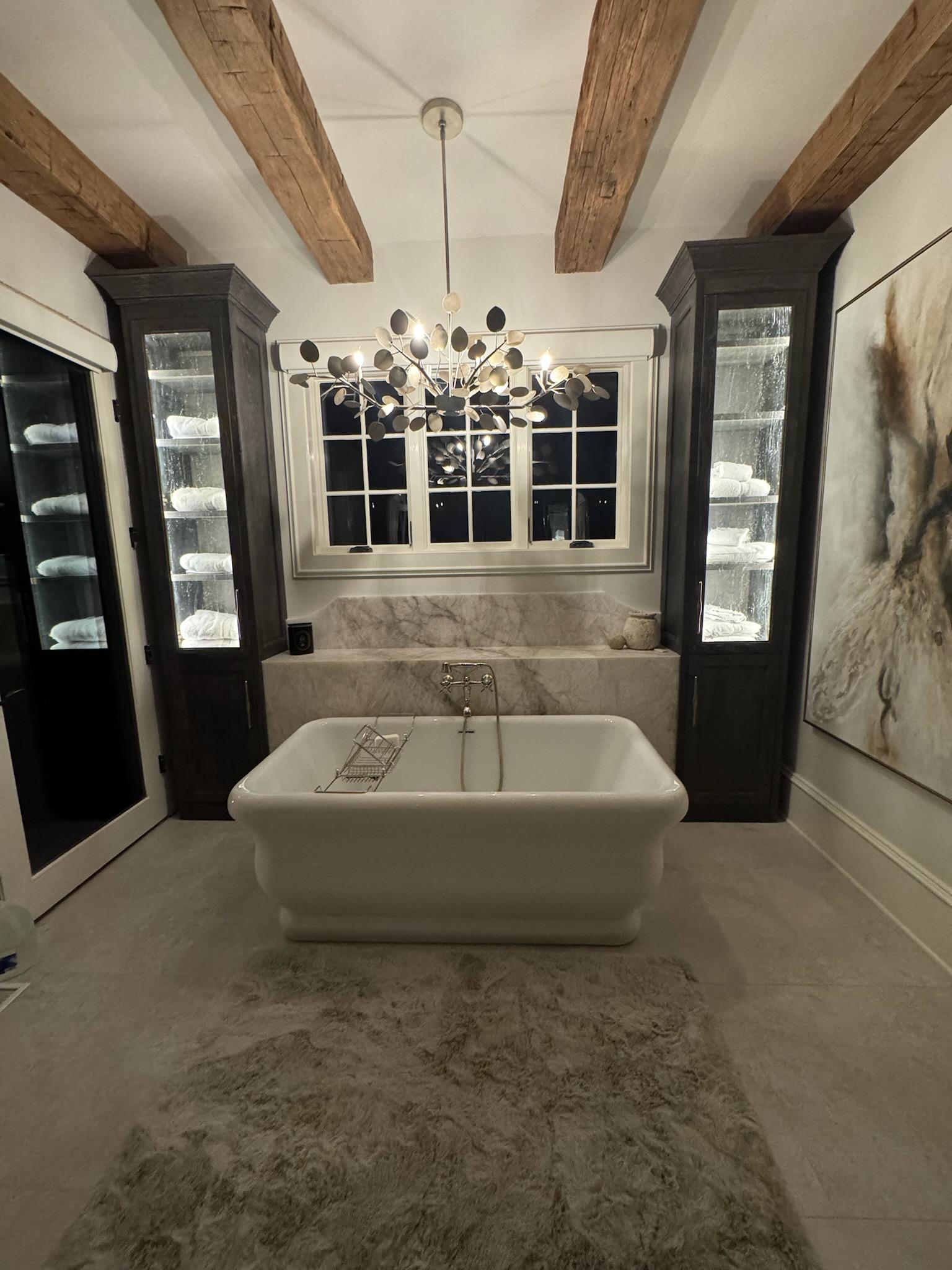
A reclaimed box beam costs more than foam and less than a solid timber, and it fixes every problem on the list above. It is hollow, so it is not heavy. It installs the same way, on blocking your carpenter sets. And it is real reclaimed wood with real axe marks, nail holes and mortise pockets that are different on every beam. If you plan to live in the house, show it, or sell it as a premium home, the beams are one of the few finishes a buyer actually touches. Make them real.
Two things to know before you compare quotes. Box beams are decorative; if a beam carries load, that is a solid beam your builder or engineer specifies. And we are a supplier: we build and ship the beams, your carpenter hangs them, and brackets or hardware are sold separately.
How to tell faux from real on a walkthrough
- Knock. Foam is a dull thud. A wood box beam is a wooden knock. A solid timber is a thump.
- Look at the ends and corners. Foam corners are molded in one piece. A real box beam has a mitered seam you can find if you look, and real end grain if it is capped.
- Compare beams. If two beams share the same knot in the same place, it is foam.
- Look for the nail holes. Real barn timber has square nail holes and the odd mortise pocket. Molds copy some; they never copy enough.
We go deeper on this in faux wood beams vs. real reclaimed box beams.
Faux beam value FAQ
Do faux beams increase home value?
Not in an appraisal. They can improve how a room shows, which can help a sale, but they are counted as decor.
Do real wood beams increase home value?
Real beams are a named feature in listings and a common ask from buyers of farmhouse, lodge and transitional homes. They support the price of the house rather than adding a fixed number to it.
Are faux beams cheaper than real wood beams?
Yes, up front. A reclaimed box beam is the middle option: real wood, hollow, carpenter-installed, without the cost or engineering of a solid timber.
Can you tell the difference between faux and real beams?
From the doorway, sometimes not. From arm’s length, always.
Will foam beams devalue my home?
Badly painted or obviously repeating foam can read as cheap in a premium home. In a mid-range home, done well, it is neutral.
See the real thing before you decide
Every quote from the box beam page comes with free samples. Put one next to a foam sample and the decision usually makes itself. Text Us a Photo of your ceiling or call 678-203-8437.